
How Smart Brands Use Co-Packing Services to Cut Inventory Risk
By Hal Justice
Many food and CPG brands configure display units and promotional kits well before a retailer’s purchase order arrives. It seems logical: get ahead of the build, stay ready to ship. The problem is that retailers change specs, swap one SKU for another, adjust quantities, and push programs, which means pre-built inventory often does not match what actually gets ordered. The result is rework, write-offs, or both.
There is a better approach. Hold product in bulk and delay final configuration until the purchase order is confirmed. The 3PL operational service that makes it possible is co-packaging services integrated with the warehouse where product is already stored, so the build happens after the order, not before. The concept is called packaging postponement.
For food and beverage brands managing multiple retail accounts, seasonal promotions, and variable order sizes, getting this right changes how the inventory challenge works. Here is how.
In this article, you’ll discover:
- Why pre-configured display inventory creates unnecessary risk for food and CPG brands
- What secondary packaging formats are and when each one applies
- How delayed configuration through co-packing services reduces waste without touching primary packaging
- What your 3PL needs to execute this strategy effectively
- When packaging postponement makes the most sense for your supply chain
The Problem with Configuring Early
Retail purchase orders are rarely as predictable as the forecast suggests. Buyers may confirm a floor stand program for one region and a counter display for another, or push a Q3 promotional configuration until it barely resembles what was originally planned. Brands that have already built to a specific configuration at that point have limited options.
Reworking finished display units back into inventory is labor-intensive and often damaging to primary packaging, so writing it off or donating it becomes the more viable option. It is still expensive either way, which is why more brands are pushing final configuration as late as possible.
What Co-Packaging Services Cover
Secondary packaging is everything outside the primary package: the shipper, the display, the overwrap, the promotional kit. That is where brand requirements and retailer specifications intersect, and because modifying it does not require opening or altering the primary package, delayed configuration is practical at scale.
The formats brands use for retail vary by account and channel. Each one serves a different merchandising purpose and carries different build timing implications. The table below breaks down the most common formats, where they apply, and when it makes sense to build them.
| Format | What It Is | Retailer Context | When to Build |
|---|---|---|---|
| Floor Stand Display | Freestanding pallet or half-pallet display unit | Mass, club, and grocery | After PO confirmed with quantity and configuration |
| Counter Display | Smaller unit for checkout or endcap placement | Drug, grocery, convenience | After account-specific program is confirmed |
| Power Wing | Side-stack display attached to existing shelving | Mass and grocery | After planogram and shelf placement are confirmed |
| Shelf-Ready Packaging (SRP) | Pre-loaded shipper that opens directly onto the shelf | Grocery and mass | Built to retailer spec after PO is received |
| Variety Kit / Bundle | Multiple SKUs combined into a single consumer unit | Club, DTC, and promotional programs | After final SKU mix and quantities are confirmed |
How Delayed Configuration Works in Practice
The operational logic is straightforward. Product arrives at the warehouse in primary packaging, whether individual units, cases, or master cartons, and is inspected, received, and stored, frequently with the co-packing line holding or allocating that SKU and quantity until the retailer’s purchase order arrives with the confirmed configuration, quantity, and ship date. From there, the team builds to specification:
Steps in a delayed configuration program:
- Stage bulk donor product from warehouse storage to the co-packing floor
- Build to PO spec: display units, variety kits, or promotional configurations as confirmed
- Apply retail compliance requirements: labels, price tickets, or account-specific stickers
- Palletize to retailer receiving standards, including pallet configuration, labeling, and documentation
- Ship against the confirmed order on the agreed timeline
What Co-Packing Services Require from Your 3PL
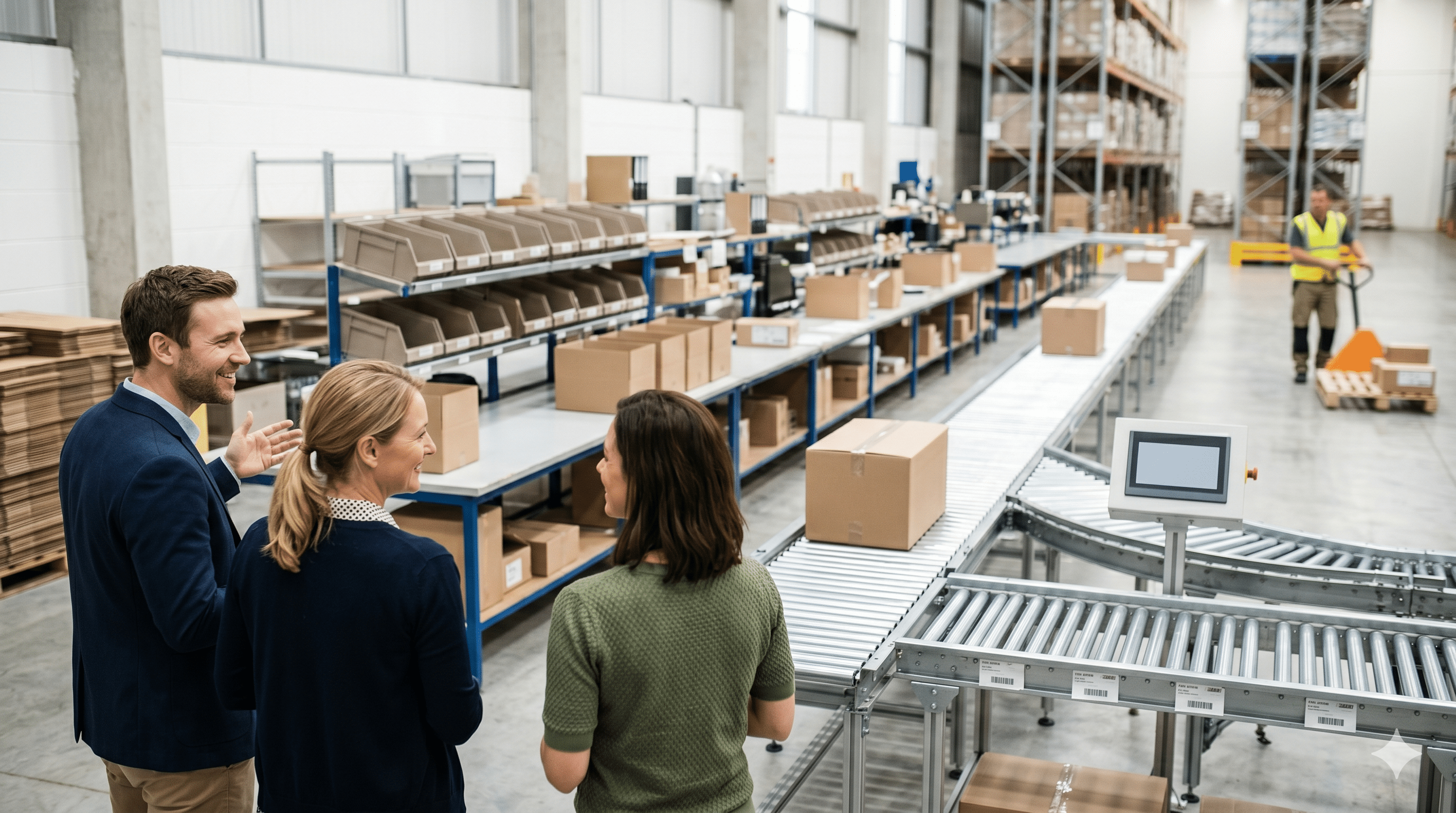
Not every 3PL can execute this model. The warehouse and co-packing operation optimally need to be in the same facility, or the handling costs and timing delays between storage and configuration will undercut the strategy. When those functions are split across different sites, brands pay for extra freight, extra touches, and extra time between the order and the ship date.
Line capacity matters as much as location because a 3PL that can staff up for a promotional surge and turn configurations quickly after the PO lands gives brands the tight window they need between order confirmation and ship date. One that cannot flex is a bottleneck, not a partner. The operational depth of an industry-specific 3PL makes a real difference here, particularly for food and beverage brands with shelf life or date code requirements.
Beyond location and line capacity, lot tracking rounds out the requirements. Configuring bulk donor product into display units requires knowing which lots go into which units, particularly for food, beverage, and pharmaceutical products. Retailers will reject shipments that arrive without compliant lot documentation, and that is a condition of doing business with major accounts, not a detail to sort out after the program launches.
The Right Time to Configure Is After the Order
Packaging postponement is not right for every brand or every category. It works best when order variability is high, promotional configurations change by account or season, and the cost of building early and wrong outweighs the cost of holding product in bulk a little longer. For food and beverage importers and CPG brands managing multiple retail relationships, that description fits more often than most brands expect.
Building to a confirmed purchase order rather than a forecast is not just a way to cut waste, because the integrated supply chain advantage comes from keeping warehousing and co-packing under one roof, with a 3PL that has the line capacity and lot-level tracking to execute when the order arrives. According to a 2025 Deloitte survey of food and beverage supply chain professionals, inventory flexibility is among the top strategic priorities reshaping supply chain planning today. Delayed configuration is one of the more direct ways to get there.
If you’re evaluating 3PL partners for co-packing services that support delayed configuration programs, Atlanta Bonded Warehouse provides integrated warehousing, co-packing, and lot-level tracking for food and beverage, confectionery, and pharmaceutical brands. Contact us to discuss your requirements.
Frequently Asked Questions
What is packaging postponement in the CPG supply chain?
Packaging postponement is a supply chain strategy where brands hold product in bulk and delay final configuration until the retailer’s purchase order is confirmed. Instead of building display units or promotional kits based on a forecast, the product stays in primary packaging until the order arrives with confirmed quantities, formats, and ship dates. This reduces the risk of building inventory that does not match what the retailer actually orders. To be fair, there are many co-packed units that over time have become standard SKUs with demand easier to forecast and build accordingly.
What is the difference between primary and secondary packaging?
Primary packaging is the packaging that directly contains the product: the bottle, the bag, the wrapper. Secondary packaging is everything around it, including the shipper case, the display unit, the overwrap, and the promotional kit. Co-packaging services for delayed configuration work at the secondary packaging level, which means brands can reconfigure product for different accounts or promotions without opening or altering the primary package.
Which secondary packaging formats are most common for retail?
The most common formats are floor stand displays, counter displays, power wings, shelf-ready packaging, and variety kits or bundle packs. Each serves a different merchandising purpose and applies to different retailer contexts. The right format depends on the account, the channel, and the specific requirements confirmed by the retailer’s purchase order.
What does a 3PL need to support a delayed configuration program?
The three core requirements are co-located warehousing and co-packing operations, flexible line capacity to respond quickly after order confirmation, and robust lot tracking for products with expiration dates or shelf life considerations. When warehousing and co-packing are split across different facilities, the extra handling and freight costs can reduce the cost advantage the strategy is designed to create.
Is packaging postponement the right strategy for every brand?
Not every brand or category benefits equally. The strategy works best when order variability is high, promotional configurations differ by account or season, and the cost of building to the wrong specification outweighs the cost of holding product in bulk a little longer. Brands with highly predictable orders and a single retail configuration may find that the logistics overhead outweighs the flexibility benefit.
How does lot tracking work in a co-packing operation?
Lot tracking in a co-packaging operation links the specific lots of bulk product pulled from warehouse storage to the finished display units or kits assembled for each order. For food, beverage, and pharmaceutical products, this documentation is required by major retailers and by food safety regulations. Frequently, the new codes are sprayed on the new bag, bottle, or case on the co-packaging line at the time of the build. A 3PL operating co-packaging and warehousing under one roof can maintain lot-level traceability from receiving through final shipment without gaps in the chain.